
Victorian Furniture Restoration With Royal Grace

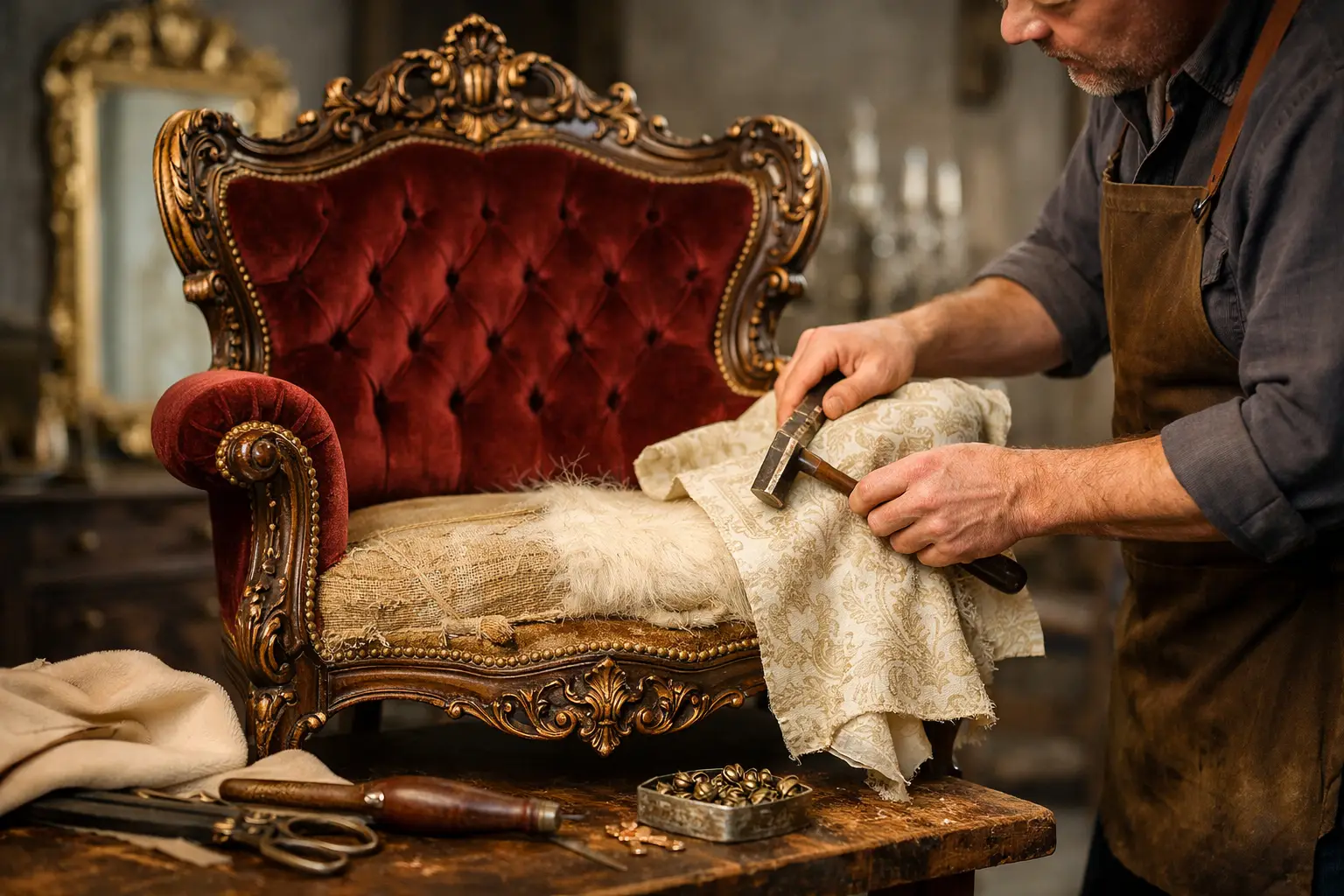
A Victorian settee can arrive with a broken rail, tired velvet, and a finish darkened by more than a century of polish. Yet beneath those wounds may rest a magnificent composition of hand-carved walnut, floral crests, turned legs, and the dignified proportions that gave the Victorian home its sense of ceremony. Victorian furniture restoration is not simply a matter of making an old piece look new. It is the art of protecting its soul while restoring its rightful presence.
For homeowners who value a residence with history, a restored Victorian piece can become the visual center of a library, formal sitting room, grand entry, or richly layered bedroom. It carries the hand of the original maker into a new generation, giving a room a distinction that cannot be purchased from a showroom floor.
Why Victorian Furniture Deserves a Thoughtful Restoration
The Victorian era produced furniture of remarkable variety. Early pieces often reflected Gothic Revival and Renaissance Revival influences, with pointed arches, dark woods, and architectural carving. Later examples embraced Rococo Revival curves, exuberant floral ornament, tufted upholstery, and graceful cabriole legs. Eastlake furniture introduced a more geometric, disciplined character, while Aesthetic Movement pieces welcomed Japanese and classical influences.
This range means restoration cannot follow one formula. A heavily carved walnut parlor chair requires a different approach from an ebonized Eastlake cabinet or a gilt and upholstered tête-à-tête. Each must be understood in relation to its materials, period character, construction, and intended role in the room.
The greatest mistake is treating a genuine Victorian piece as a blank canvas for a passing trend. Removing a historic finish, replacing carved details with generic moldings, or covering a frame in unsuitable fabric may make the furniture appear refreshed at first glance, but it can erase the very qualities that make it exceptional. A sympathetic restoration respects the original design while allowing the piece to live beautifully in a modern home.
The First Decision: Restore, Preserve, or Reimagine?
Before any work begins, the furniture should be examined closely. The question is not merely whether it is old. The question is what remains, what has been altered, and what the piece needs to become stable and beautiful again.
A piece with a sound original finish, minor surface wear, and valuable patina may need careful cleaning, wax removal, touch-up, and protective finishing rather than full stripping. Those softened edges, gentle variations in color, and small traces of age can be part of its visual authority. In a palace-inspired interior, patina gives furniture the feeling of having belonged to a house of legacy rather than having been manufactured to imitate one.
When a finish has blackened beyond recognition, flaked away, or been damaged by heat, water, or unsuitable refinishing, a more extensive restoration may be appropriate. Structural repairs come first. Loose joints, weakened rails, cracked veneers, missing mounts, and unstable springs should never be hidden behind a beautiful new finish or upholstery.
There are also occasions when a reimagining is the more honest choice. A Victorian frame that has already lost its original upholstery, decorative trim, and finish may offer an extraordinary foundation for a bespoke transformation. It can be upholstered in silk velvet, damask, brocade, or another fabric chosen to support the room’s complete story. The goal is not to pretend nothing changed, but to create a new chapter worthy of the original craftsmanship.
Examine the Frame Before Choosing the Fabric
A dramatic textile can make a client fall in love with a chair instantly, but fabric should be selected after the frame is assessed. Victorian seating often conceals issues beneath layers of upholstery: brittle webbing, collapsed horsehair stuffing, rusted springs, deteriorated burlap, or repairs made decades ago with the wrong nails and adhesives.
A proper restoration rebuilds comfort as carefully as appearance. Traditional methods may be especially fitting for an important heirloom or formal antique, while modern support materials can make sense when the piece will be used every day. It depends on whether the furniture is meant for ceremonial beauty, regular family living, or both.
Victorian Furniture Restoration Begins With Craftsmanship
The most successful restoration work is often quiet. A repaired chair rail should not announce itself. Veneer repairs should follow the grain and reflect the wood’s natural movement. Replacement carving must have the same depth, rhythm, and shadow as the surrounding ornament, rather than appearing mechanically copied.
Wood selection matters deeply. Victorian furniture was frequently made in walnut, mahogany, rosewood, oak, maple, and fruitwood, sometimes enriched with contrasting inlays or ebonized surfaces. Matching the species, grain direction, color, and finish is essential when repairing a loss. A pale, poorly matched patch on a richly toned walnut cabinet can interrupt the entire composition.
Gilded furniture requires equal restraint. Gold leaf, gilding wax, and metallic paints create very different effects. On an ornate frame inspired by the drawing rooms of Versailles or the gilded salons of European royal residences, the finish should possess depth and variation. Perfectly flat gold can feel commercial. Layered gilding, softened in selected recesses and burnished on raised ornament, gives the surface a more authentic sense of age and splendor.
At My Palace Room, restoration can become part of a larger artistic vision: an heirloom chair may be renewed to complement a custom Baroque sofa, a royal portrait, hand-painted walls, or a complete room designed around a beloved European palace. The restored piece remains itself, yet it also takes its place within a more personal world.
Choosing a Finish That Honors the Era
Victorian interiors were rarely timid. Deep walnut, oxblood, forest green, midnight blue, black lacquer, gilt accents, and richly patterned textiles all belonged to the language of the period. Still, a historically inspired finish should be chosen with care for the home around it.
A formal dining room with tall ceilings and antique brass lighting may welcome a deep, polished mahogany finish. A brighter Southern sitting room may call for a softened walnut tone, pale gilding, and a warm ivory silk velvet that brings the carving forward without making the room feel heavy. The same Victorian chair can appear stately, romantic, or dramatic depending on the palette that surrounds it.
Avoid over-restoring the surface until all evidence of age disappears. A finish may be refined without looking plastic. The finest result preserves visual depth, allows carving to cast shadows, and gives the wood a finish appropriate to its original character. Luxury is not always high shine. Often, it is the confidence of a surface that has been finished with judgment.
Upholstery Should Serve the Architecture
Victorian furniture often asks for upholstery with presence. Tufted backs, carved show wood, buttoned arms, and deeply sprung seats were designed to be seen, not hidden. Velvet is an enduring choice for its light-catching pile and theatrical richness, while damask and brocade can introduce period pattern with great elegance.
Scale is crucial. A large floral may overwhelm a petite slipper chair, while a tiny pattern can disappear across a generous settee. Consider the architecture of the room as well. If walls, draperies, and rugs already carry strong pattern, a jewel-toned solid velvet may give an ornate Victorian frame the grandeur it deserves. If the room is more restrained, a woven textile can bring the necessary sense of ornament.
Trim should be treated as jewelry. Gimp, bullion fringe, decorative nails, braid, and tassels can elevate a piece, but excess can turn refinement into costume. The most regal rooms balance elaboration with moments of calm.
Giving Restored Pieces a Place of Honor
A restored Victorian piece is most compelling when it is allowed to command a deliberate setting. Place a carved armchair beside a marble-topped side table and a sculptural lamp, rather than crowding it among unrelated furnishings. Let an antique settee establish symmetry before a fireplace, beneath a portrait, or at the foot of a dramatic bed.
Mixing periods can be beautiful when the relationship is intentional. Victorian seating can sit beside a French Rococo mirror, neoclassical columns, or a Baroque coffee table when color, scale, and ornament are thoughtfully connected. What matters is not strict museum purity, but the creation of a room with emotional coherence.
A restored heirloom should never be relegated to a corner because it feels too precious to use. Give it a setting equal to its story. When craftsmanship, history, and personal vision meet, Victorian furniture becomes more than a surviving antique. It becomes an invitation to live each day surrounded by majestic beauty.