
Neoclassical Interior Design for a Royal Home

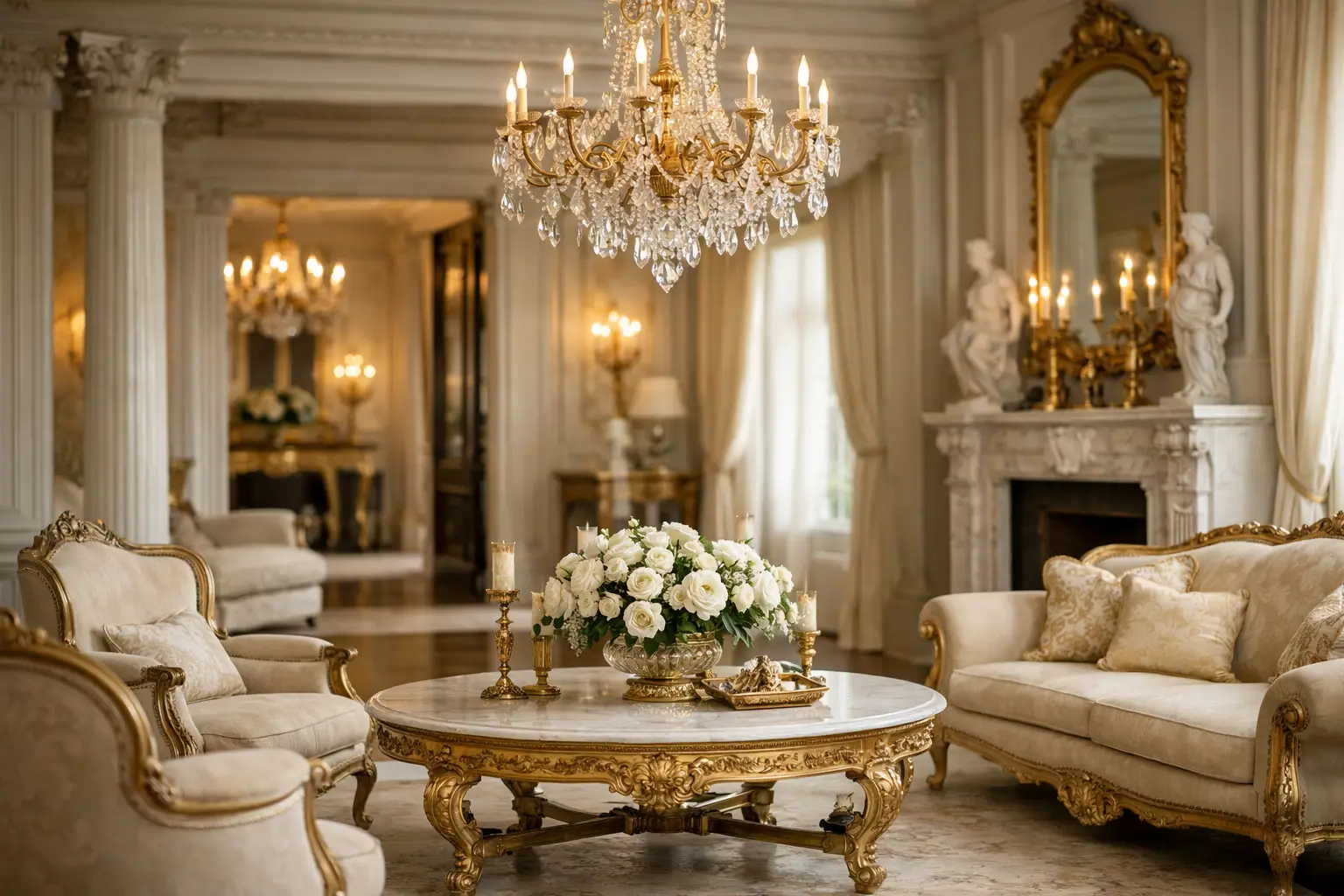
A perfectly proportioned room can feel more commanding than one crowded with ornament. That is the enduring power of neoclassical interior design: it creates an atmosphere of cultivated grandeur through balance, architectural clarity, and details chosen with intention. For a homeowner who wishes to live among beauty with the poise of a European royal residence, it offers a magnificent answer to the question of how luxury should feel.
This is not a style built on excess for its own sake. It is the art of making every element appear inevitable: the carved chair placed beneath a classical portrait, the gilded mirror answering the height of the room, the marble-topped table centered beneath a crystal chandelier. The result is regal, serene, and deeply personal.
What Defines Neoclassical Interior Design?
Neoclassicism emerged in the late 18th century as Europe looked back to ancient Greece and Rome for ideals of order, civic grandeur, and refined beauty. Its influence traveled through the great courts and palaces of France, Britain, Austria, Spain, and Russia, taking on distinctive local character along the way. One can see its language in the measured splendor of the Royal Palace of Madrid, the elegant state rooms of Buckingham Palace, and the imperial confidence of the Winter Palace.
In a residence, neoclassical design begins with symmetry. Furniture is arranged to give the room a center and a sense of ceremony. Paired armchairs, matching consoles, balanced sconces, and a central chandelier create visual calm before a single decorative detail is considered. This order gives rich materials room to speak.
The style also favors recognizable classical motifs: fluted columns, laurel leaves, acanthus carvings, rosettes, urns, medallions, Greek-key borders, and restrained gilding. These details should feel integrated into the architecture and furnishings, not scattered across the room as decoration without purpose. A neoclassical chair with a carved crest and tapered legs has a different presence from a generic upholstered chair with gold paint applied afterward.
Color is equally deliberate. Ivory, warm white, stone, soft gray, pale blue, sage, muted blush, and antique gold create a luminous foundation. Deeper shades such as royal blue, emerald, oxblood, and burgundy may be used in velvet upholstery, drapery, or a dramatic painted wall, especially in a dining room, library, or formal salon. The finest rooms balance lightness with depth rather than relying on a single shade throughout.
The Difference Between Neoclassical and Baroque Rooms
Clients drawn to palace interiors often admire both Baroque and neoclassical traditions, yet the emotional character of each is distinct. Baroque interiors are theatrical. They embrace movement, curved forms, dramatic carving, strong contrasts, and a sense of ceremonial abundance. Rococo takes this further into playful asymmetry, delicate curves, and romantic ornament.
Neoclassical interiors return to discipline. Curves remain, but they are more controlled. Gilding is present, but it frames rather than overwhelms. Ornament is used with intellectual precision, inspired by the ancient world and translated through the tastes of royal courts. Where a Baroque salon may feel like a performance, a neoclassical room feels like an audience chamber prepared for lasting conversation.
Neither approach is inherently more luxurious. It depends on the home, its architecture, and the owner’s vision. A grand residence with high ceilings may welcome a full Baroque drawing room, while a formal dining room or entry hall may gain greater authority from neoclassical symmetry. Many exceptional homes combine periods thoughtfully: a sculptural Baroque mirror can hang above a clean-lined neoclassical console when scale, finish, and color create a believable relationship.
Building a Room With Architectural Presence
A successful neoclassical room should be designed from the perimeter inward. Before selecting a sofa or accent table, consider the room’s bones. Ceiling height, window placement, floor material, wall proportions, and natural light all shape the final composition. A modestly sized room can still feel palatial when its proportions are honored; forcing oversized furniture into it will only diminish the effect.
Walls offer one of the most powerful opportunities. Decorative molding, paneling, plaster medallions, pilasters, and carefully placed mirrors create the architectural rhythm that this style requires. Even a simpler room can acquire greater dignity through raised wall panels painted in one elegant color, with a more detailed cornice or ceiling medallion above. The aim is not to reproduce a museum room without thought, but to give the residence a sense of history and intention.
Flooring should ground the composition. Wood laid in herringbone or parquet patterns is especially appropriate, as are marble, stone, and richly patterned rugs with traditional borders. A rug should be large enough to anchor the seating arrangement or dining table. Small rugs floating in the middle of a spacious room can make expensive furniture look accidental.
Lighting is where the room becomes alive after sunset. A crystal chandelier provides ceremony, but it should be supported by wall sconces, table lamps, and perhaps picture lights. Layered illumination reveals carving, silk, metallic leaf, and the changing depth of painted finishes. Choose warm light that flatters gold, wood, and skin tones. A cold white bulb can make even beautiful materials feel severe.
Furniture Should Be Composed, Not Collected
In neoclassical interiors, furniture is not merely functional. It establishes rank, rhythm, and comfort. Start with one or two commanding pieces: perhaps a hand-carved sofa, an elegant pair of armchairs, a marble-topped coffee table, or a richly finished dining table. Then build around them with complementary forms rather than purchasing every item from a matching set.
Look for craftsmanship in the details. Solid wood construction, carved ornament, hand-applied finishes, quality upholstery, and balanced proportions create the distinction between a temporary trend and a piece worthy of inheritance. Tapered legs, carved capitals, brass mounts, gilded accents, and carved floral or laurel motifs all belong naturally in this tradition when executed with restraint.
Comfort matters as much as ceremony. A formal sofa should still invite its owners and guests to sit. Dining chairs should support long evenings at the table. A room that looks grand but feels forbidding has missed the emotional generosity of royal living. Bespoke furniture offers the freedom to tailor seat depth, upholstery, finish, dimensions, and decorative language to both the home and the people who inhabit it.
Art, Portraiture, and the Personal Story of the Home
The most memorable palace-inspired interiors do not feel copied from a catalog. They reveal the family’s passions, travels, heritage, and dreams. Portraiture is especially powerful in a neoclassical setting because it gives the room a human center. A custom royal portrait, placed in an ornate frame above a mantel or console, can transform a beautiful room into a personal dynasty of one’s own making.
Classical paintings, architectural studies, antique maps, botanical works, and finely framed mirrors all complement the style. The scale of art is critical. One substantial painting can command a wall more effectively than many small pieces. Likewise, a large mirror placed opposite a window or chandelier can multiply light and create the illusion of an even grander salon.
Accessories should be selected as punctuation, not clutter. A pair of porcelain urns, bronze figurines, marble busts, crystal objects, or decorative boxes can enrich a console or mantel. Leave breathing room between them. Luxury becomes visible when each object has space to be admired.
A Tailored Palace, Not a Reproduction
Historical inspiration becomes truly luxurious when it is translated for modern life. A home does not need to imitate Versailles room for room to carry the spirit of European grandeur. In fact, restraint often makes the reference more convincing. A contemporary kitchen may be softened with classical moldings, antique-brass hardware, painted cabinetry, and a statement chandelier. A primary bedroom can feature upholstered walls, a carved bed, silk drapery, and a carefully balanced pair of bedside tables without becoming overly formal.
This is where an artist-led approach makes a profound difference. At My Palace Room, a room can be conceived around a particular palace, period, color story, or treasured piece of furniture, then brought to life through handmade furnishings, decorative painting, restoration, and closely considered artistic detail. The goal is not simply to furnish a residence. It is to create a masterpiece of history and art that belongs unmistakably to its owner.
Begin with the room that deserves to become your private salon, your grand dining chamber, or your most elegant retreat. Let its proportions guide the design, let craftsmanship determine the quality, and let your own story give the space its royal soul.