
Versailles Inspired Living Room Ideas That Endure

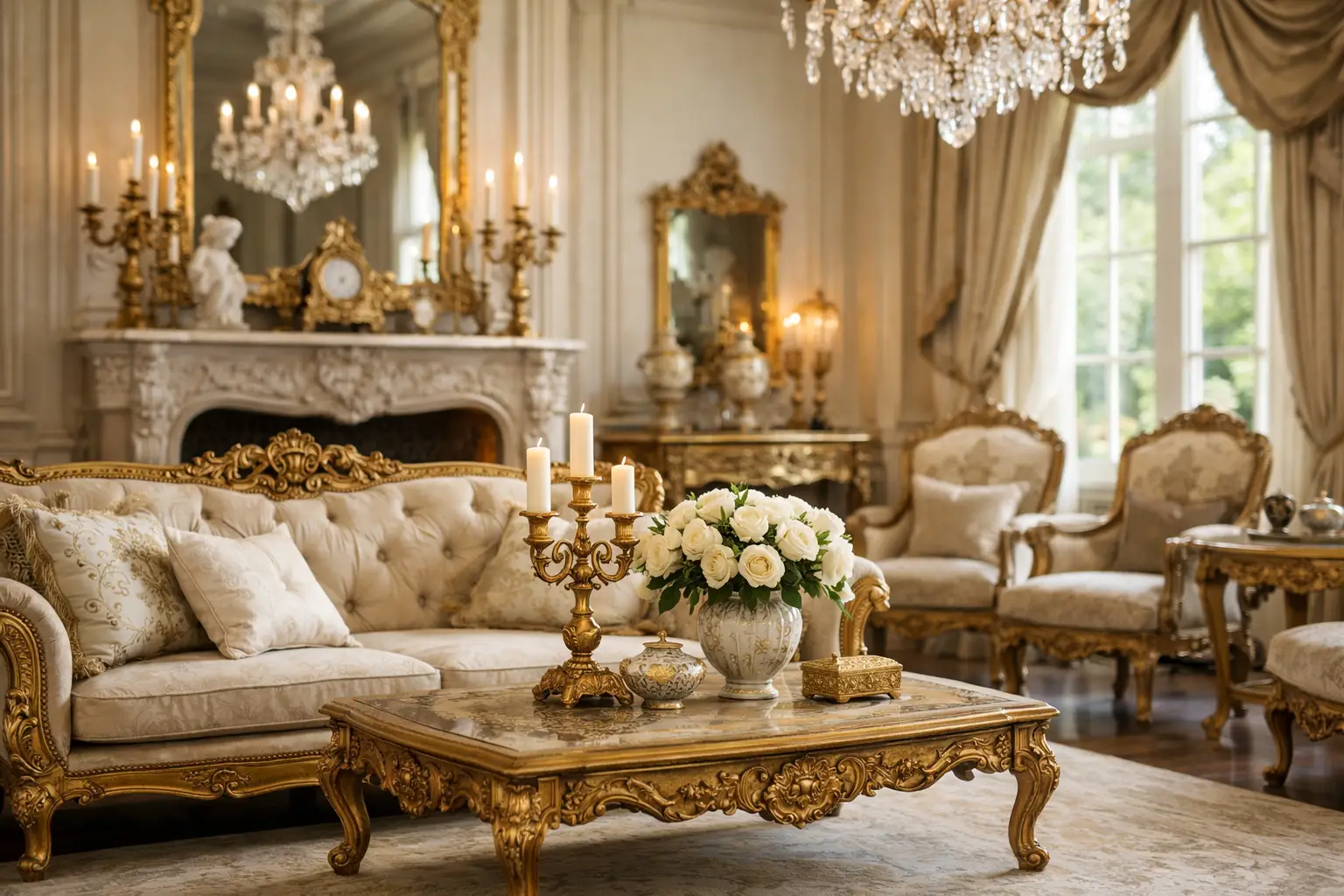
A Versailles-inspired living room should never feel like a stage set. Its purpose is not to imitate a museum chamber, but to give daily life a more majestic setting: a room where afternoon light catches a carved gilt frame, where guests settle into a beautifully proportioned sofa, and where every detail seems chosen with intention. The finest Versailles inspired living room ideas begin with that distinction. They honor the palace’s language of beauty while making room for the way an American home is actually lived in.
The Palace of Versailles was built around spectacle, certainly, but also around disciplined artistry. Its interiors unite symmetry, movement, craftsmanship, and light. Bring those principles into your own home, and the result can feel regal, personal, and remarkably welcoming.
Begin With a Palace-Worthy Point of View
Versailles is often reduced to gold leaf and ornament, yet its true power lies in composition. A great room has a visual center, balanced furniture placement, and an elegant conversation between architecture and furnishings. Before choosing a chair or paint color, identify the room’s strongest feature. It may be a fireplace, a tall window, a mantel, an antique mirror, or a custom ceiling treatment.
Arrange the room so this focal point has authority. A pair of matching chairs can frame a fireplace, while a substantial sofa faces it from across a sculptural coffee table. If the space is long, create two seating moments rather than pushing all furniture to the walls. Versailles interiors were designed for ceremony and conversation, and their modern interpretation should invite both.
Symmetry is particularly helpful in rooms with traditional architecture, high ceilings, or formal entry sightlines. It is less necessary in a compact or open-plan living room, where strict pairing can make the arrangement feel crowded. In those spaces, repeat a finish, fabric, or silhouette instead. A gilded side table may visually answer a gold-framed portrait across the room without requiring identical pieces.
Choose Furniture With Presence, Not Excess
Furniture is where a palace-inspired room becomes convincing or merely decorative. Look for deeply carved wood, graceful cabriole legs, shaped aprons, hand-applied finishes, and upholstery with a generous profile. Louis XV-inspired pieces bring fluid, Rococo movement with their curved arms and romantic lines. Louis XVI-inspired furnishings are more tailored, using straighter legs, medallion backs, fluting, and neoclassical restraint.
Neither style needs to dominate every inch of the room. In fact, a living room is often more refined when one exceptional piece leads the story. A hand-carved Baroque sofa in ivory velvet can establish the room’s authority, while quieter companion chairs, a refined side table, and a classic rug give it room to breathe. A carved coffee table with marble, painted, or artistic resin detail can become a functional centerpiece without interrupting the formality of the seating plan.
Scale matters as much as style. Oversized throne-like seating can overwhelm a modest room, while small, thin furniture will disappear beneath a high ceiling. Measure carefully, including pathways and the distance between seating. The most luxurious rooms never feel difficult to move through.
For clients seeking a fully personal result, made-to-order furniture offers a meaningful advantage. The depth of a sofa, height of a chair, finish of the wood, and selection of fabric can be tailored to the home rather than compromised for a showroom floor. My Palace Room approaches these decisions as part of one artistic vision, not as separate purchases.
Create a Color Story That Lets Gold Glow
Gold belongs in a Versailles-inspired interior, but it should be treated as light, not as a blanket. Aged gold, champagne gilt, antique brass, and warm silver-gold finishes bring dimension that bright yellow metallic paint rarely achieves. Let gilded elements appear where the eye naturally rests: mirror frames, picture frames, furniture carvings, sconces, curtain hardware, and select architectural moldings.
The surrounding palette should support this glow. Soft ivory, stone, warm white, pale taupe, dove gray, and muted blush create a luminous foundation. For a more dramatic interpretation, consider sapphire, burgundy, peacock blue, forest green, or deep aubergine. These darker tones can make gilt carving and pale upholstery look even more magnificent, especially in a room with abundant natural light.
A pale room feels airy and courtly, with a closer connection to the Salon of Mirrors. A darker room feels intimate, theatrical, and suited to evening entertaining. Neither is inherently more luxurious. The decision depends on the room’s daylight, ceiling height, and the atmosphere you want to experience after sunset.
Let the Walls Carry History
At Versailles, walls were never an afterthought. Paneling, mirrors, painted ornament, tapestries, and portraiture turned the architecture into a masterpiece of history and art. In a private residence, one or two of these gestures can transform an otherwise ordinary envelope.
Decorative wall molding is among the most effective investments. Raised panels, applied trim, and a substantial crown molding give a living room the structure that ornate furniture needs. Paint the moldings the same color as the walls for subtle relief, or use a slightly warmer or deeper shade to reveal the panel pattern. If the home permits greater transformation, hand-painted ornament or a custom ceiling medallion can create a singular sense of occasion.
Mirrors are essential not because they fill empty wall space, but because they multiply light. Place an ornate mirror above the mantel or opposite a window, where it can reflect daylight and the room’s finest furnishings. Avoid scattering too many small mirrors around the room. One grand piece carries more authority than a collection of decorative fragments.
Portraiture also gives the space personality. A classical portrait, an artistic family commission, or a custom royal-inspired painting can make the room feel inherited rather than assembled. The frame matters. A strong gilt or dark carved frame helps the artwork hold its place against richly finished walls.
Layer Textiles for Comfort and Ceremony
The courtly rooms of France were rich in textiles because fabric softens architecture and signals comfort. Velvet is an obvious choice, but it is not the only one. Silk-look damask, linen blends, brocade, jacquard, and embroidered fabrics each bring texture without requiring excessive ornament.
Use your most formal fabric where it will have impact: on the principal sofa, a pair of accent chairs, or full-length drapery. Then introduce contrast through pillows, trims, and an area rug. A rug with an old-world floral motif or restrained medallion pattern can define the seating arrangement while protecting the room from becoming too visually busy.
Drapery should feel generous. Panels that begin near the ceiling and extend to the floor lengthen the room and lend the windows a palace-like scale. If full swags and elaborate valances suit your architecture, they can be breathtaking. In a cleaner transitional home, simply use lined panels, beautiful hardware, and a refined trim. The effect remains noble without becoming costume-like.
Light the Room Like an Evening Salon
A chandelier is the natural jewel of this interior, particularly above the central seating area or in a room with a high ceiling. Crystal captures the splendor of Versailles, while a carved gilt chandelier offers a warmer, more sculptural interpretation. But overhead light alone is too severe for a living room designed for relaxation.
Add table lamps on carved side tables, picture lights above significant art, and wall sconces that cast a gentle wash across textured walls. Warm bulbs are essential. A room of gilt finishes, velvet, and antique-inspired wood needs light that flatters the materials and the people within it.
Edit With a Collector’s Eye
The temptation with royal interiors is to keep adding. More gold, more pillows, more figurines, more pattern. Yet the most persuasive Versailles-inspired living rooms understand pause. Let a fine chair be seen. Let an antique clock have space on the mantel. Let the carved silhouette of a table emerge clearly against the rug.
Choose accessories with a story: porcelain, bronze objects, books on art and history, a pair of candlesticks, a vase with seasonal branches, or a carefully placed sculpture. A room gains authenticity through layered craftsmanship, not through a crowded assortment of symbols.
Your living room does not need the square footage of a palace to possess its spirit. It needs a clear vision, exceptional pieces, and details chosen with enough care that the room feels like it has always belonged to you. That is where royal living becomes more than a style. It becomes the quiet pleasure of coming home to beauty made personal.