
How to Choose Baroque Chairs for a Royal Home

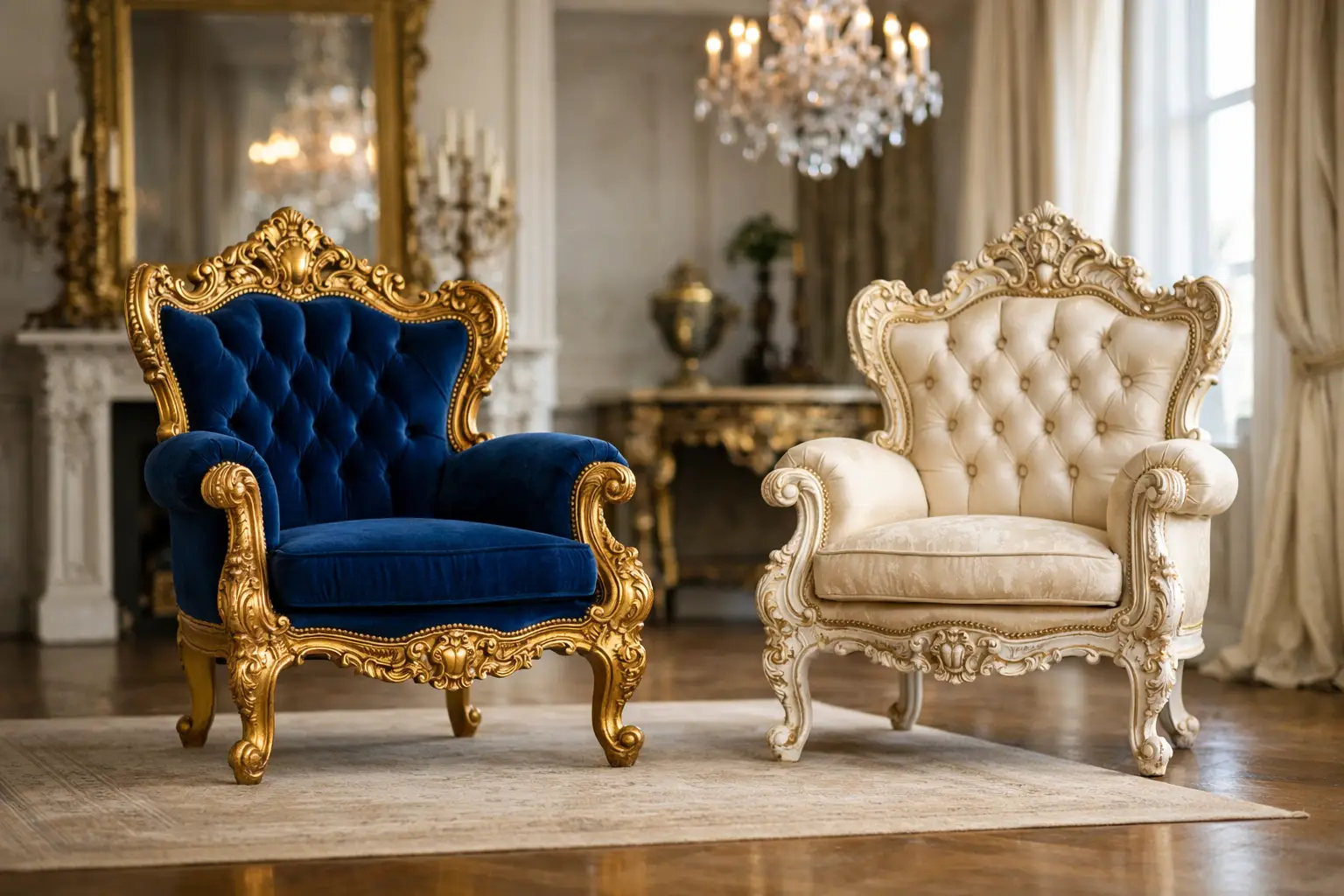
A Baroque chair is never merely a place to sit. Its silhouette announces the room before a guest has taken in the drapery, the art, or the chandelier. When considering how to choose baroque chairs, look beyond ornament alone. The right piece should carry a sense of history while belonging completely to your home, your architecture, and your personal vision of royal living.
A finely made chair can evoke the ceremonial splendor of Versailles, the gilded intimacy of the Winter Palace, or the stately drama of a European salon. Yet even the most beautifully carved frame loses its magic when it is too small for the room, too ornate for the intended period, or upholstered in a fabric that does not support the larger composition. Choosing well is an artistic decision as much as a practical one.
Begin With the Palace Era That Inspires You
Baroque is often used as a broad description for richly carved, upholstered furniture, but the style contains distinct personalities. Establishing the historical mood first makes every later choice clearer, from the curve of a chair leg to the warmth of its gold finish.
The grand French Baroque associated with Louis XIV favors authority, symmetry, and architectural presence. Think high backs, formal proportions, sculptural crest rails, bold gilding, and fabrics that appear worthy of a royal audience chamber. These chairs bring magnificent gravity to a dining room, formal entry, or salon with generous ceiling height.
A later Rococo influence is lighter, more intimate, and more playful. Its frames may have softer curves, asymmetrical floral carving, cabriole legs, and a more romantic rhythm. A Rococo-inspired chair can be especially beautiful in a dressing room, bedroom sitting area, or a smaller parlor where a severe, heavily monumental piece would feel overpowering.
Italian palace influences often invite more theatrical carving, deep color, and an expressive sense of movement. Spanish royal references can feel darker and more ceremonial, with powerful silhouettes that suit richly paneled rooms. The essential question is not which palace is most famous. It is which historical language feels most natural in your home.
How to Choose Baroque Chairs by Proportion
Scale is where a luxurious idea either becomes a masterpiece or a mistake. Baroque chairs were designed in an age of high ceilings, grand fireplaces, portraiture, and rooms intended for ceremony. Their visual weight needs space around it.
Before selecting a chair, measure the room and consider the entire furniture plan. A tall, carved armchair may be magnificent as a pair beside a fireplace, but it needs enough wall height and surrounding negative space for the crest to be appreciated. In a dining room, allow sufficient room for guests to pull chairs back comfortably without disturbing the drama of the table, sideboard, or drapery.
Do not judge only the chair’s footprint. Measure its overall height, arm width, seat depth, and the open space it requires in use. A chair with a broad, heavily carved frame can command more visual territory than its dimensions suggest. In a compact room, choose a more graceful side chair, a lower profile, or a pair of accent chairs rather than forcing a throne-like form into a setting that cannot honor it.
There is also a useful contrast to consider. A deeply ornate chair may look even more regal against a quieter architectural backdrop, such as pale plaster walls, disciplined millwork, or a single dramatic antique-style mirror. A room does not need every surface to compete. Palace interiors achieve richness through composition, not clutter.
Choose the Right Seat for Its Role
A dining chair must be elegant, but it must also support a long dinner. A living room bergère or upholstered armchair should invite lingering conversation. An occasional chair may be selected primarily for its silhouette, especially when it stands as a ceremonial accent in an entry hall or beside a grand piano.
For daily use, pay close attention to seat height, cushion support, and arm placement. A magnificent chair that feels awkward at the dining table will rarely be enjoyed. For decorative use, you may place greater importance on an exceptional crest, carved apron, or fabric story. The finest interiors allow beauty and comfort to share the same throne.
Look for Craftsmanship That Gives Ornament Meaning
The distinction between a chair that appears ornate and one that feels genuinely luxurious is usually found in the handwork. Baroque design depends on dimension. Carving should have depth, shadows, and a living quality rather than looking stamped onto a flat surface.
Examine the frame carefully. Solid hardwood construction is a meaningful foundation for a chair intended to become part of a lasting home. Look for balanced carving around the crest, arms, legs, and apron. Floral motifs, acanthus leaves, shells, masks, and scrolls should feel integrated into the chair’s structure, not attached as decoration after the fact.
Finish deserves the same scrutiny. Gold leaf or a carefully layered antique-gold finish can create an aged, luminous character that bright metallic paint cannot replicate. Depending on the room, you may prefer ivory with delicate gold accents, walnut tones with restrained gilding, silver leaf for a cooler European atmosphere, or a darker finish that emphasizes the carving through contrast.
The upholstery work should be tailored and deliberate. A loosely fitted fabric can weaken even a superb frame. Consider the placement of welting, nailhead trim, tufting, and decorative braids. These details should serve the chair’s period character, not simply add more ornament.
Select Fabric as You Would Select Jewelry
Fabric changes the emotional temperature of a Baroque chair. Crimson velvet creates ceremony and sensuality. Sapphire, emerald, and amethyst tones bring the richness of a royal jewel box. Ivory damask, soft champagne silk, or pale blue brocade can suggest a luminous French salon and allow gilded carving to take the lead.
For a family home or frequently used dining room, performance velvet or a durable woven fabric may be a wiser choice than delicate silk. This is not a compromise in grandeur. It is an intelligent adaptation that allows the room to be lived in beautifully. The material should suit the life of the household as well as the story of the interior.
Pattern requires restraint and confidence. If the walls, rugs, and window treatments are already elaborate, a solid velvet or subtly textured fabric may give the chair more authority. In a restrained room, a dramatic brocade can become the artistic focal point. Consider how the fabric appears in daylight, evening lamplight, and beneath a chandelier, because each condition reveals a different side of its color and texture.
Create a Cohesive Room, Not a Furniture Collection
A palace-inspired room is not built by collecting unrelated ornate objects. It is composed through recurring decisions: a shared finish, a family of curves, a disciplined color palette, and a clear historical point of view.
Your Baroque chairs may echo the gilding of a mirror, the carved profile of a console table, or the warm undertones of a painted ceiling. They do not need to match every other piece exactly. In fact, a room often gains sophistication when complementary forms are mixed with care. A pair of formal French armchairs can sit beautifully with a more sculptural Italian coffee table when the finishes, textiles, and proportions speak to one another.
Consider placement as part of the design. A matched pair creates symmetry and ceremony. A single exceptional chair can establish a focal point at the end of a hall, near a fireplace, or in a private reading corner. Around a dining table, chairs should create a unified rhythm, while host chairs may be slightly grander to mark the head and foot of the table.
When Custom Design Is the Better Choice
Ready-made chairs can be useful when their scale, finish, and character are already right. But many distinguished homes have unique proportions, cherished architectural details, or a client vision that deserves more than a close approximation. Custom work allows the chair’s dimensions, carving, finish, upholstery, and level of formality to be shaped around the room itself.
This is especially valuable when recreating the atmosphere of a particular palace or era. A custom piece can take inspiration from historical forms without becoming a museum copy, allowing personal comfort and the realities of an American home to guide the final design. At My Palace Room, this individualized approach turns historical reference into furniture made for the life you actually live.
Choose the chair that makes you pause at the doorway and imagine the room already complete. When its craftsmanship, proportion, and history feel in harmony, it will not simply furnish your home. It will give the room a sovereign spirit of its own.