
How to Design a Palace Room With Real Grandeur

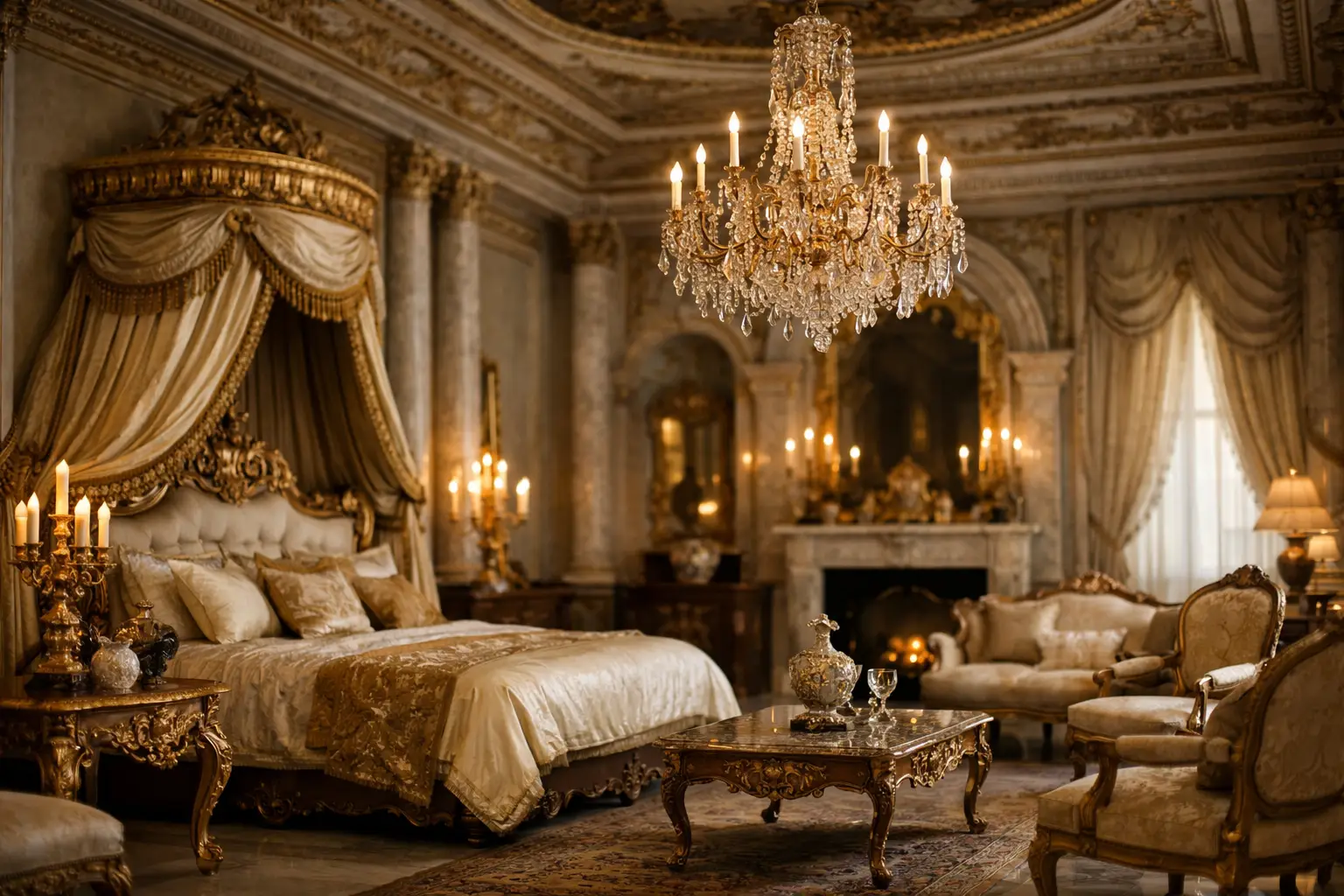
A palace room should never feel like a furniture showroom wearing gold leaf. It should feel composed: a place where every carved chair, silk curtain, painted panel, and gleam of metal appears to belong to the same distinguished story. Learning how to design a palace room begins with this principle. Grandeur is not created by adding ornament without restraint. It is created by choosing an era, honoring proportion, and allowing craftsmanship to carry the room.
The most memorable royal interiors were designed to express power, artistry, and a highly personal point of view. Your home may not have the endless galleries of Versailles or the ceremonial rooms of Buckingham Palace, but it can possess the same sense of arrival. The goal is not to reproduce a museum. It is to create a living masterpiece of history and art, designed around the way you entertain, rest, and dream.
Begin With a Palace and an Era
Before selecting a sofa or a wall color, decide which royal language the room will speak. European palace design changed dramatically from one period to another, and blending every historic reference into one room often weakens the result.
A French Baroque room, inspired by Versailles under Louis XIV, favors strong symmetry, rich gilding, deeply carved forms, marble-like surfaces, and colors such as royal blue, crimson, ivory, and antique gold. Rococo interiors, associated with the reign of Louis XV, are lighter and more intimate. Their curved silhouettes, floral carving, soft pastel tones, and playful asymmetry lend themselves beautifully to a sitting room or bedroom. Neoclassical design, seen at Schönbrunn and in many formal European residences, brings a calmer authority through columns, medallions, restrained gilding, laurel motifs, and balanced geometry.
You may also begin with a particular memory: the drama of the Winter Palace, the warmth of the Royal Palace of Madrid, or the English dignity of Windsor. The reference palace need not dictate every detail. It gives the room a visual discipline. Once that foundation is clear, personal preferences can enter gracefully without interrupting the historical character.
How to Design a Palace Room Around Proportion
The most expensive carved furniture can still look misplaced if its scale ignores the room. Palace interiors depend on hierarchy. A grand ceiling, central chandelier, statement seating arrangement, and important focal wall work together to direct the eye. Even in a modestly sized room, this hierarchy can be achieved through deliberate placement rather than excessive quantity.
Start by identifying the room’s natural focal point. It may be a fireplace, a tall window, an architectural niche, or a wall that can become one through decorative painting, a large mirror, or a commissioned royal portrait. Arrange the principal furniture to honor that point. A pair of Baroque armchairs framing a fireplace creates more majesty than several unrelated chairs scattered around the room.
Ceiling height matters. In a room with lower ceilings, choose furniture with elegant carved details but avoid oversized crowns, massive cabinets, and overly heavy drapery. Use vertical elements instead: tall mirrors, elongated panels, narrow gilded frames, and curtains mounted close to the ceiling. In a larger room, deeper sofas, substantial coffee tables, and a more dramatic chandelier can carry the scale without looking forced.
Symmetry is a trusted palace device, but it does not require stiffness. Two matching side tables or chairs can establish order, while a hand-painted screen, sculptural accessory table, or antique-inspired chaise introduces a note of individuality. The room should feel formal enough to be memorable and comfortable enough to be lived in.
Build the Room in Layers, Not Purchases
A palace room is not assembled in one shopping trip. It is built in layers, beginning with its architectural envelope. Walls, floors, ceilings, and window treatments create the stage on which the furnishings will appear.
Wall treatment often makes the greatest transformation. Flat white drywall can be elevated with panel molding, decorative trim, painted boiserie, metallic detailing, mural work, or richly toned wallpaper with a period-conscious pattern. A pale ivory wall with gold relief may create a luminous French salon. Deep green, oxblood, or sapphire can give a library or formal dining room the richness of an old European residence. Dark colors are especially successful where there is generous natural light or strong layered lighting. In a small or dim room, they should be balanced with mirrors, warm lamps, and lighter upholstery.
Floors need visual weight as well. A pale rug may work in a Rococo-inspired room, especially with floral silk upholstery and soft carved wood. For more masculine Baroque or neoclassical grandeur, consider a patterned rug with burgundy, navy, black, gold, or muted earth tones. The rug should be large enough to unite the seating area. A small rug floating beneath a grand sofa makes the entire composition feel undersized.
Then select the anchor pieces. A handmade Baroque sofa, a pair of throne-like chairs, an ornate coffee table, or a distinguished bed can establish the room’s identity. These pieces deserve room around them. Palace design is not about filling every wall. It is about giving exceptional objects enough space to command attention.
Choose Color Like a Court Designer
Royal color schemes are rich because they are layered, not because every surface is bright. Select one dominant color, one supporting color, and a metallic finish that repeats throughout the room. For example, ivory walls, sapphire velvet, and antique gold create a dramatic French-inspired composition. Pearl gray, blush, and champagne gold suggest a gentler Rococo mood. Forest green, mahogany, and aged brass evoke a stately English drawing room.
Gold is powerful, but it requires judgment. Bright yellow gold on every frame, table, chair leg, and lamp can turn a refined interior into a theatrical set. A mix of antique gold, burnished brass, and soft matte finishes has more depth. Let gilding appear where the eye naturally rests: on a mirror frame, the crest of a chair, molding details, a console, or a chandelier.
Fabric brings the palette to life. Velvet, damask, brocade, embroidered linen, silk-look textiles, and tufted upholstery all have a place in a palace room. Consider performance fabrics for frequently used family spaces. Historic beauty should not require anxiety every time someone sits down with a glass of wine.
Let Craftsmanship Be the Ornament
Mass-produced furniture often imitates palace forms with shallow carving, lightweight materials, and finishes that feel uniform. A true palace-inspired room benefits from pieces that reveal the hand of the maker: carved wood with dimension, upholstery tailored to the frame, hand-applied finishes, and details that remain beautiful at close range.
This is where custom work changes everything. A table can be designed to fit a precise alcove. A sofa can be scaled to the room rather than forced into it. An inherited chair can be restored and reupholstered so it becomes part of a new royal vision. Decorative painting, decoupage, custom portraiture, and artistic finishes can introduce a story that cannot be duplicated in another home.
At My Palace Room, the design process is centered on this kind of personal translation: the client’s preferred palace, era, colors, and lifestyle become the basis for handmade furnishings and a complete artistic environment. A room inspired by royalty should still belong unmistakably to the person who lives there.
Light the Room for Evening Splendor
Palace interiors are designed to change character as daylight fades. A chandelier offers ceremony, but it should not be the only source of illumination. Add wall sconces, picture lights, table lamps, or discreet accent lighting to reveal texture in the walls, carving, artwork, and fabrics.
Warm light is generally more flattering to gold finishes, dark woods, and richly colored textiles than cool white light. Dimmers are essential. The same room may need clear light for conversation and a lower, candlelit glow for an intimate dinner. If the chandelier is large or heavily ornamented, choose simpler supporting fixtures so the ceiling remains elegant rather than crowded.
Mirrors deserve special consideration. Positioned to reflect a chandelier, tall window, or beautiful architectural feature, they multiply light and bring the illusion of a more expansive salon. Their frames should relate to the room’s period, whether boldly gilded and carved or more restrained with neoclassical lines.
Edit the Final Details
The final layer gives the room its soul: porcelain, sculpture, framed art, books, fresh flowers, decorative boxes, and objects collected through travel or family history. These details should feel curated rather than accumulated. A palace room has visual richness, but each element needs a reason to be present.
Use repetition to create calm. If a laurel motif appears in the molding, echo it in a frame or cushion trim. If the furniture features warm walnut, introduce that tone in a picture frame or pedestal. This quiet conversation between details is what makes a room feel complete.
Allow one or two unexpected personal elements to remain. A favorite musical instrument, an heirloom painting, or a modern work of art can be extraordinary in a historic setting when it is given a place of honor. Royal living has always been personal. The most beautiful palace room is not the one that copies a photograph perfectly, but the one that makes every guest feel they have stepped into your own private kingdom.